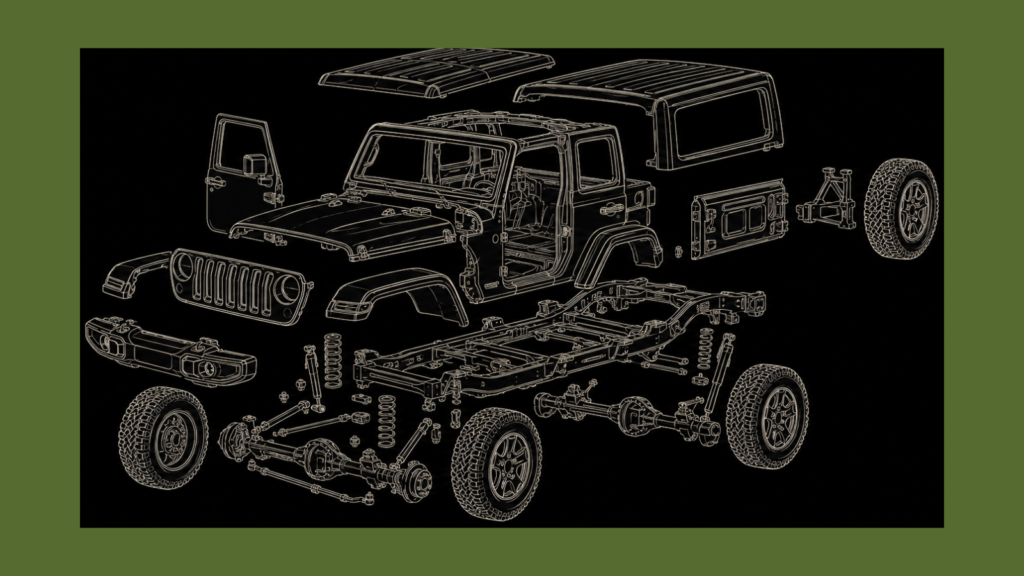
Jeep Wrangler JL research has a real problem.
Most review sites treat every product as equally worth recommending, regardless of whether it actually fits your build or use case. Retailer pages are optimized for conversion, not accuracy. Fitment nuance, honest tradeoffs, and durability context don’t sell product.
Wrangler Specs exists to fix that—specifically for JL owners who take their builds seriously and want quality research before making a serious investment in their rig.
What You’ll Find Here
The site is organized around the JL build, from the cabin out:
- Interior and Cabin Systems: Security, seat covers, sound deadening, and the storage and organization upgrades that make daily driving and trail use actually work.
- Roof and Exterior Outfitting: Roof rack systems, RTT mounts, awnings, and the gear that takes the JL beyond the pavement.
- Extended Capability Builds: Dual battery systems, portable power, solar, and the electrical upgrades that keep you running off-grid.
How the Site Is Organized
Wrangler Specs is built around three primary resources:
- Field Logs: Documented research briefings, technical testing, and sequenced build reports.
- Spec Sheets: Data-heavy comparisons and manufacturer fitment data so you can confirm compatibility before you buy.
- Parts Directory: A confirmed reference of Jeep Wrangler aftermarket brands, organized by build category, so you know who to check before you shop.
- Builder Directory: A curated directory of professional installers and specialized JL shops.
Who’s Behind This
Wrangler Specs Editorial is dedicated exclusively to the Jeep Wrangler JL platform. We enjoy researching the details that most buyers skip over—fitment differences between model years, installation quirks, long-term durability, and the tradeoffs that only become obvious after spending time with the platform.
We believe those details matter because they’re often the difference between buying the right part once and replacing the wrong one later.
Our goal is to isolate the data from the drama so common in online Jeep forums. We built this site to solve the exact friction points that make forums so frustrating: the endless scrolling, conflicting opinions, and fractured, outdated information from threads abandoned years ago.
By filtering out that noise, we deliver the clean, technical realities of the JL platform. Every product recommendation on this site has to earn its place before it makes the cut, so you can plan your build with the best information possible.
Build it right once. Know what to upgrade next.
— Wrangler Specs Editorial